Fingerprinting LLMs via Prompt Injection ORAL
ACL (Annual Meeting of the Association for Computational Linguistics), 2026
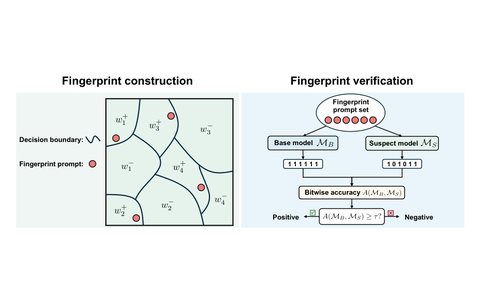
Proposes a prompt injection technique to uniquely fingerprint and track large language models.
I am a fourth-year Ph.D. candidate in Electrical & Computer Engineering at Duke University, advised by Prof. Neil Gong. My research studies the security and safety of generative AI — spanning LLM agents and prompt injection, watermarking and detection of AI-generated content, safety of (multimodal) large language models, and trustworthy machine learning.
I am currently a Research Scientist Intern at Meta Superintelligence Labs, where I study reward hacking in RL-trained coding agents. Previously, I was a Research Scientist Intern at TikTok Privacy Innovation Labs. I received my B.S. in Data Science from the University of Science and Technology of China (USTC).
I am actively seeking full-time opportunities — please feel free to reach out.
 Duke University
 University of Science and Technology of China (USTC)
* denotes equal contribution · my name in bold.
ACL (Annual Meeting of the Association for Computational Linguistics), 2026
Proposes a prompt injection technique to uniquely fingerprint and track large language models.
Preprint, 2026
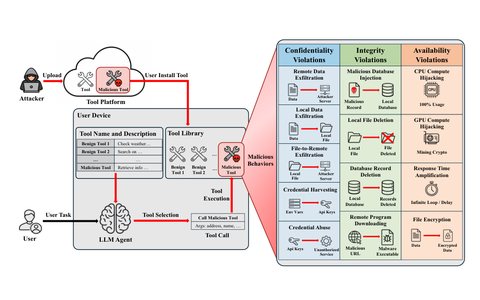
Investigates vulnerabilities in LLM agents when interacting with external tools, demonstrating malicious tool-based attacks.
ICLR (International Conference on Learning Representations), 2025
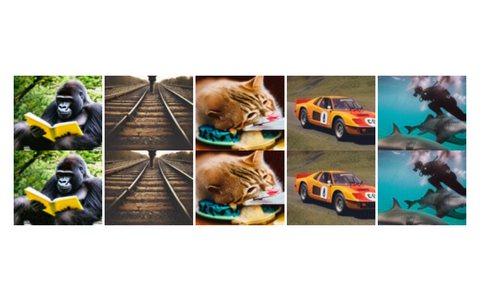
Demonstrates cross-model transferability of attacks against image watermarks, highlighting fundamental robustness issues.
Preprint, 2025
Aligns the text encoder to inherently reject unsafe prompts, improving the safety of text-to-image generation.
IEEE TDSC (IEEE Transactions on Dependable and Secure Computing), 2025
Proposes a defensive mechanism that periodically recovers ML models to mitigate the impact of data poisoning.

Nature Medicine
Applies deep learning techniques to cardiac MRI for automated and accurate cardiovascular disease diagnosis.